

Parrot Feather Pond Plant - Care & Grow Guide

by Tory Jon | Last Updated: November 16, 2022
Pond Academy is reader-supported. Buying through links on our site may earn us an affiliate commission. As an Amazon Associate I earn from qualifying purchases.

The Parrot Feather plant, commonly called Brazilian watermilfoil, is native to South America. This is a feathery plant with small leaves and a very gentle look.
Parrot feather is sold for ornamental ponds, but it is also a high-risk aquatic plant in many regions because stem and rhizome fragments can spread to new water bodies.
The parrot feather is considered one of the most popular decorative pond plants, with many added benefits that include utilizing excess nutrients, oxygenating water, and filtering out pollutants.
Invasive Potential: High. USGS and the Washington State Noxious Weed Control Board identify parrot feather as Myriophyllum aquaticum, a South American aquatic plant that can form dense mats and spread from stem or rhizome fragments.
Plant laws can restrict sale, possession, transportation, propagation, distribution, planting, or release. Confirm current rules before buying, dividing, transporting, or sharing this plant. Never release unwanted pond plants, roots, seeds, rhizomes, or trimmings into lakes, rivers, streams, wetlands, drainage ditches, storm drains, or natural ponds.

Scientific Name
Myriophyllum aquaticum
Invasive Potential
High
Common Names
Parrot's feather, water-feather and Brazilian watermilfoil
Plant Type
Light Requirements
Full sun to partial shade
Hardiness Zones
USDA Zone 6 - 11
Bloom
Typically through summer, depending on temperature
Grow Up To
Can reach up to 60" tall in the right conditions
Flower Color
Green, yellow
How to Plant Parrot Feather in a Pond
Do not plant parrot feather in natural pond banks, drainage-connected ponds, or sites that can overflow into public water. Where it is lawful to grow, keep it in a fully contained ornamental pond and use a pot or lined shelf to limit root and rhizome spread.
Get Our Best Pond Tips Sent to Your Inbox for Free!
Join thousands of others and learn from our decades of pond building and maintenance experience! Your pond will thank you!
By subscribing you agree to receive emails from PondAcademy.com. We will always respect your privacy and you can unsubscribe at any time.
Parrot Feather Care Guide
Parrot's Feather is a fast grower and will require regular trimming to prevent it from choking out other plants in your pond. Be sure to remove and properly discard any clippings away from the water so they don't decompose in your pond and potentially cause water quality issues.
You can slow their growth by planting them in pots or in shady areas of your pond.
Parrot's Feather is a hardy plant and will typically overwinter in your outdoor pond without a problem (as long as the pond doesn't completely freeze over).
Responsible Disposal
Never release parrot feather plants, roots, seeds, rhizomes, or trimmings into lakes, rivers, streams, wetlands, drainage ditches, storm drains, or natural ponds. Do not dump pond or aquarium water containing plant fragments into natural waterways.
Parrot feather fragments can produce new growth. Avoid cutting or moving it where pieces can drift away; dry and bag all stems, rhizomes, and roots for trash unless local authorities require another method.
Parrot Feather Care Card
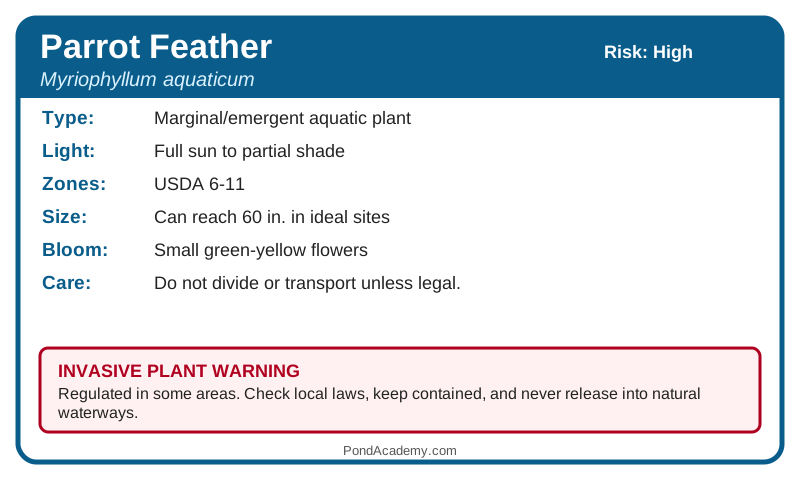
Download our free printable care card for Parrot Feather! Click the care card below and save the PDF file to your computer. You can easily print off the 3x5 care card or access it right from your phone.
Pond Plant Care Card Set
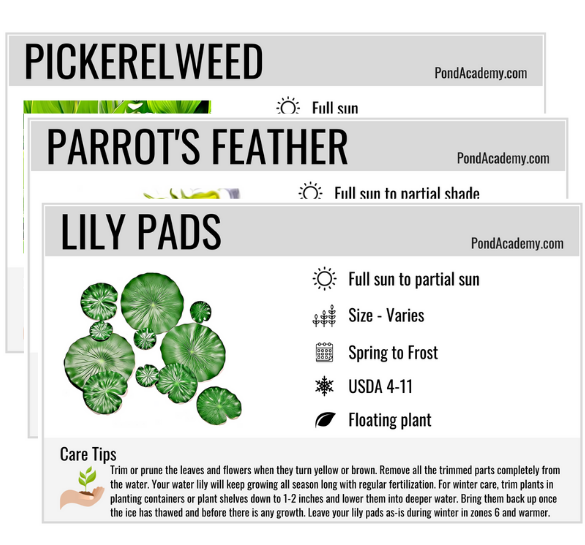
Get the full printable set of 23 pond plant care cards in one PDF. The cards are formatted for quick reference on your phone or easy 3x5 printing.


%20in%20a%20pond!%20Plus,%20learn%20how%20to%20properly%20care%20for%20Parrot%20Feather%20throughout%20the%20year%20and%20much%20more!)