
Water Hyacinth Pond Plant - Care & Grow Guide

by Tory Jon | Last Updated: November 30, 2022
Pond Academy is reader-supported. Buying through links on our site may earn us an affiliate commission. As an Amazon Associate I earn from qualifying purchases.

Water hyacinth (Pontederia crassipes, formerly Eichhornia crassipes) is a floating pond plant known for lavender summer blooms and rapid nutrient uptake.
They also help naturally add oxygen to your pond water and provide cover for your fish from predators.
Also referred to as the Common Water Hyacinth, this plant features thick green leaves that can reach up to 8" long and large lavender or pink flower blooms. In the right conditions, this floating plant can grow to 36" above the water's surface!
This perennial aquatic plant is native to South America and grows naturally in tropical and subtropical regions. Its optimal growing temperature range is 77–86 °F (25–30 °C).
Invasive Potential: High. Water hyacinth is now commonly treated as Pontederia crassipes, formerly Eichhornia crassipes. The USDA National Invasive Species Information Center notes that it forms dense colonies that block sunlight and crowd out native species.
This species is prohibited, restricted, or regulated in some states and regions. Plant laws can change, so confirm current requirements with your state agriculture or natural resources agency before purchasing, transporting, propagating, or planting it. Never release unwanted pond plants, roots, seeds, rhizomes, or trimmings into lakes, rivers, streams, wetlands, drainage ditches, storm drains, or natural ponds.

Scientific Name
Pontederia crassipes (formerly Eichhornia crassipes)
Invasive Potential
High
Common Names
Common water-hyacinth, floating water hyacinth
Plant Type
Floating Pond Plant
Light Requirements
Full to partial sun
Hardiness Zones
USDA Zone 9-11
Bloom
July through September
Grow Up To
36 inches
Flower Color
Lavender, pink
How to Plant Water Hyacinth in a Pond
To plant water hyacinths in a pond, scatter them across the surface of the water in areas that get full sun. You can help contain their growth and prevent overpopulation by scattering the plants in a floating ring.
Get Our Best Pond Tips Sent to Your Inbox for Free!
Join thousands of others and learn from our decades of pond building and maintenance experience! Your pond will thank you!
By subscribing you agree to receive emails from PondAcademy.com. We will always respect your privacy and you can unsubscribe at any time.
Water Hyacinth Care Guide
Water Hyacinths are some of the fastest-growing pond plants, so it's important to control their growth before they become detrimental to your pond. Luckily, thinning your plant population is easy - remove a batch of floating plants and discard them away from your pond. If the roots are extremely thick, use scissors to cut off a batch.
If the leaves start to turn yellow or the flowers cease blooming, they may lack nutrients. You can remedy this by pulling the plants from the water and placing them in a tub with a water/fertilizer mix per the fertilizer products instructions. Let the plants soak up the nutrients for a few days. Once they turn green and/or start to flower, pull them from the tub, rinse them off, and place them back in your pond.
Water Hyacinth struggles with freezing temperatures or cold water. In Zones 8 and lower, discard your Water Hyacinth at the end of the first frost.
Responsible Disposal
Never release water hyacinth plants, roots, seeds, rhizomes, or trimmings into lakes, rivers, streams, wetlands, drainage ditches, storm drains, or natural ponds. Do not dump pond or aquarium water containing plant fragments into natural waterways.
Water hyacinth spreads quickly through daughter plants and may produce seed. Do not compost viable plants where they could survive; dry thoroughly, bag, and trash plants and roots unless local authorities direct otherwise.
Water Hyacinth Care Card
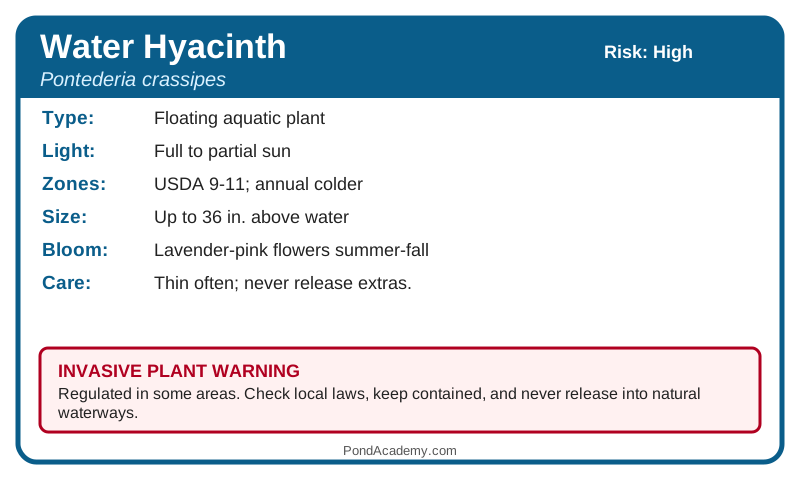
Download our free printable care card for the Water Hyacinth plant! Click the care card below and save the PDF file to your computer. You can easily print off the 3x5 care card or access it right from your phone. Get all the important information you need to keep your Water Hyacinth plants healthy and happy!
Plus, we provide a blank card for you to print and fill out yourself. Print it as many times as you like to create cards for all your plants!
Pond Plant Care Card Set
Get the full printable set of 23 pond plant care cards in one PDF. The cards are formatted for quick reference on your phone or easy 3x5 printing.