

Water Iris Pond Plant - Care & Grow Guide

by Tory Jon | Last Updated: November 16, 2022
Pond Academy is reader-supported. Buying through links on our site may earn us an affiliate commission. As an Amazon Associate I earn from qualifying purchases.

Water Iris, sometimes referred to as Rabbit's Ear Iris, is a semi-aquatic plant that will add beauty and color to your backyard pond!
If you are creating an ornamental wildlife pond, then this is the perfect addition to it! This marginal plant will make an excellent transition from the edge of your pond to the landscaping around it (where they even prevent erosion).
In addition to this, water irises help remove toxins and keep pond water clean and clear. And if you're worried about your fish eating them, you'll be happy to hear that they typically tend to avoid them!
Invasive Potential: Low. This article covers water iris, Iris laevigata, the species profiled by NC State Extension. It is different from yellow flag iris, Iris pseudacorus, which is widely treated as invasive or noxious in some regions.
Check labels carefully before buying pond irises, and avoid planting any iris directly into natural pond banks where rhizomes or seeds could move into wetlands. Never release unwanted pond plants, roots, seeds, rhizomes, or trimmings into lakes, rivers, streams, wetlands, drainage ditches, storm drains, or natural ponds.

Scientific Name
Iris laevigata
Invasive Potential
Low
Common Names
Rabbit ear iris
Plant Type
Marginal pond plant/bog plant
Light Requirements
Full to partial sun
Hardiness Zones
USDA Zone 5 - 9
Bloom
May through July
Grow Up To
24 inches
Flower Color
Whte, blue
How to Plant Water Iris in a Pond
Water Iris should be planted in a one-gallon or larger container with a rich sandy/soil mix and placed in your pond marginal area with around 3" of water covering the pot. Fertilize the plants once a month throughout Summer.
Get Our Best Pond Tips Sent to Your Inbox for Free!
Join thousands of others and learn from our decades of pond building and maintenance experience! Your pond will thank you!
By subscribing you agree to receive emails from PondAcademy.com. We will always respect your privacy and you can unsubscribe at any time.
Water Iris Care Guide
Water Iris is fairly low maintenance as long as it gets ample sunlight, preferably the more mild morning sunlight and afternoon shade.
It does thrive best with regular applications of aquatic fertilizer during the Summer months.
Regularly trim any dead foliage, making sure to properly discard any clippings away from the water, so they don't decompose in your pond and potentially cause water quality issues.
Tip: Regularly inspect your Water Iris plants for bugs and pests. You may have to manually or chemically control these pests to prevent them from infesting your colony of plants.
In Fall, simply cut off any dead foliage and trim the plant to 1-2 inches above the water line. Water Iris will overwinter just fine in your pond. In Spring, the plants will begin growing again.
Responsible Disposal
Never release water iris plants, roots, seeds, rhizomes, or trimmings into lakes, rivers, streams, wetlands, drainage ditches, storm drains, or natural ponds. Do not dump pond or aquarium water containing plant fragments into natural waterways.
Iris rhizomes and seeds can spread. Dry and bag divided rhizomes, seed pods, and cut foliage, and do not dump pond water with plant fragments into natural waterways.
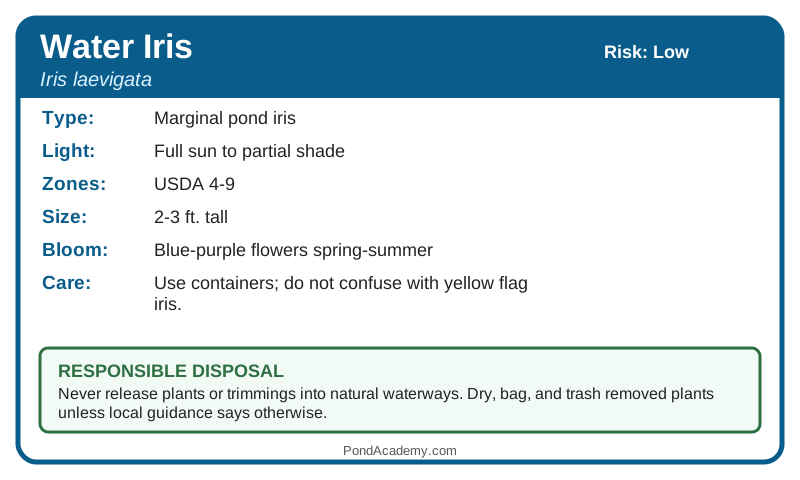
Water Iris Care Card
Download our free printable care card for the Water Iris plant! Click the care card below and save the PDF file to your computer. You can easily print off the 3x5 care card or access it right from your phone. Get all the important information you need to keep your Water Iris plants healthy and happy!
Plus, we provide a blank card for you to print and fill out yourself. Print it as many times as you like to create cards for all your plants!
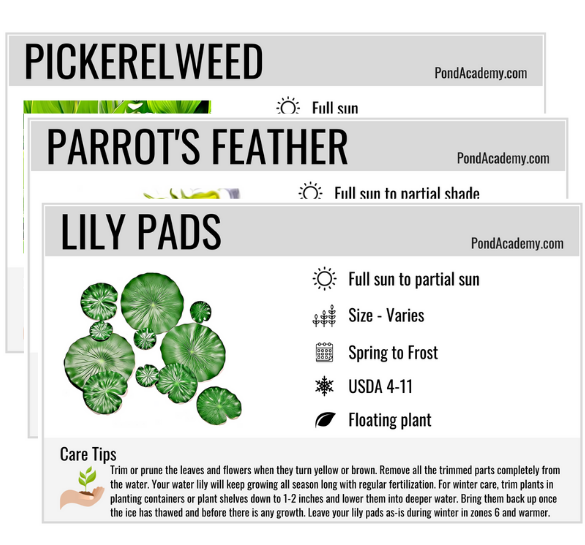
Pond Plant Care Card Set
Get the full printable set of 23 pond plant care cards in one PDF. The cards are formatted for quick reference on your phone or easy 3x5 printing.


%20in%20a%20pond!%20Plus,%20learn%20how%20to%20properly%20care%20for%20Water%20Iris%20throughout%20the%20year%20and%20much%20more!)