

Popular Pond Plants That Are Banned or Restricted in Parts of the U.S.

by Tory Jon | Last Updated: August 26, 2026
You spot a beautiful floating plant at a nursery or in a neighbor's pond, and it seems like an easy way to add shade and soften the water's edge. Before bringing it home, take one extra step and check whether that exact plant is allowed where you live.
Some familiar pond and aquarium plants are banned or restricted in parts of the United States. They still appear in older pond books and online photos. Some even turn up in retail listings. A listing is no guarantee that you may legally buy or keep the plant. Planting and transport may be restricted, too. Even giving the plant to someone else could be prohibited.
Why a pond plant can become a legal problem
A plant that behaves politely in a small lined pond can become a serious problem after it escapes. Floodwater or wildlife can carry pieces into natural water. People also cause escapes by dumping unwanted clumps or allowing pond overflow to reach a ditch.
Some aquatic plants can regrow from tiny fragments. Once loose, they may spread through shallow waterways and nearby wetlands.
Dense growth can crowd out native plants and alter habitat. It may also make boating or fishing difficult. Removing an established infestation can be expensive, which is why states sometimes regulate plants before they become widespread.
The rules are not the same everywhere. A species may be legal in one state and prohibited in the next. Labels such as "noxious" and "controlled" can carry specific legal requirements. Simply seeing a plant described as "invasive" does not tell you which activities, if any, are prohibited.
One rule may restrict sales or entry into a state. Another may prohibit possession or transportation. Releasing a plant can be a separate offense. Local governments and authorities responsible for a watershed or lake may impose further limits.
Get Our Best Pond Tips Sent to Your Inbox for Free!
Join thousands of others and learn from our decades of pond building and maintenance experience! Your pond will thank you!
By subscribing you agree to receive emails from PondAcademy.com. We will always respect your privacy and you can unsubscribe at any time.
Popular pond plants with actual legal restrictions
The table below gives a representative legal restriction for each plant. It is not a complete map of every state where the species is regulated. Rules also change, so always check the current requirements where you live.
Texas, for example, lists water hyacinth and water lettuce as harmful or potentially harmful exotic aquatic plants. Texas law generally prohibits importing, possessing, selling, or placing a listed plant into public water unless an applicable authorization or exception applies.
Washington takes a different approach with the four plants identified in the table below. Washington Administrative Code (WAC) 16-752-610 places these species under the state's noxious weed seed and plant quarantine. WAC 16-752-620 defines the covered plants, plant parts, and seeds as regulated articles. WAC 16-752-640 generally prohibits transporting or transferring these regulated articles into or within Washington, including through sales and other distribution. Applicable exemptions appear in WAC 16-752-650.
| Plant | Why it causes concern | Representative legal restriction |
|---|---|---|
Water hyacinth Pontederia crassipes 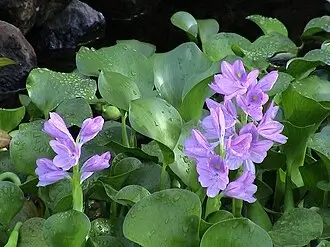 |
It can form thick floating mats in warm waterways. | Texas designates water hyacinth as a harmful or potentially harmful exotic aquatic plant. State law generally prohibits importing, possessing, selling, or placing it into public water unless an applicable authorization or exception applies. |
Water lettuce Pistia stratiotes 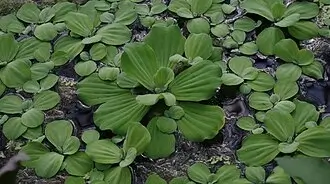 |
It can spread rapidly and cover the water surface in a suitable climate. | Texas designates water lettuce as a harmful or potentially harmful exotic aquatic plant. State law generally prohibits importing, possessing, selling, or placing it into public water unless an applicable authorization or exception applies. |
Parrotfeather Myriophyllum aquaticum 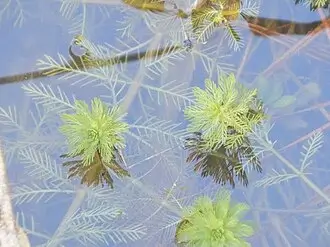 |
Broken stems can establish new plants beyond the pond. | Washington generally prohibits transport and transfer of this regulated species into or within the state, subject to applicable exemptions. |
Brazilian elodea or anacharis Egeria densa 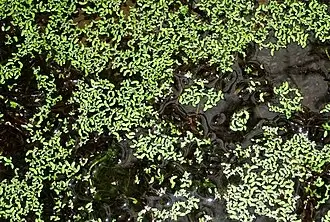 |
It can develop into dense underwater growth that interferes with native vegetation and water use. | Washington generally prohibits transport and transfer of this regulated species into or within the state, subject to applicable exemptions. |
Yellow floating heart Nymphoides peltata 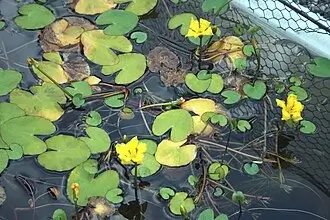 |
It can spread across the surface and shade other aquatic plants. | Washington generally prohibits transport and transfer of this regulated species into or within the state, subject to applicable exemptions. |
Yellow flag iris Iris pseudacorus 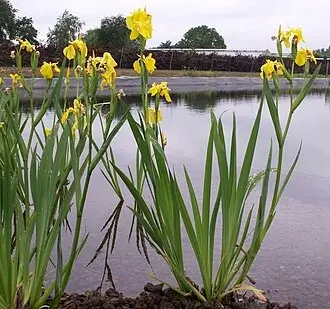 |
It can spread through wet soil and displace native shoreline plants. | Washington generally prohibits transport and transfer of this regulated species into or within the state, subject to applicable exemptions. |
Image credits: Water hyacinth by Wouter Hagens, public domain; water lettuce by Dinkum, CC0; parrotfeather by Blake Bringhurst, CC0; Brazilian elodea by Daderot, CC0; yellow floating heart by Karelj, public domain; and yellow flag iris by KVDP, public domain. Images sourced via Wikimedia Commons.
Plant names can change as scientific classifications are updated, which adds another wrinkle when checking regulations. Water hyacinth is a good example. Texas still lists it as Eichhornia crassipes, while Plants of the World Online accepts Pontederia crassipes and treats the older name as a synonym.
When researching a plant, searching both the current scientific name and known synonyms can help you find regulations written under an older classification.
Hydrilla, or Hydrilla verticillata, is another plant pond owners should recognize. Federal noxious weed regulations list hydrilla as an aquatic and wetland noxious weed. Federal rules prohibit moving it into or through the United States or interstate unless an applicable permit has been approved and its conditions are followed.
States may impose additional limits within their borders. A state rule may control whether you can keep the plant or transfer it to someone else. Do not collect hydrilla from the wild or bring home an unidentified submerged plant that resembles it.
Fast growth is not automatically bad in a contained water garden. The concern begins when a species escapes and survives local conditions. From there, it may spread into natural waterways.
How to check the rules before buying
Research the plant before ordering it or accepting a division from another pond owner. Checking first is much easier than figuring out what to do with a prohibited plant later.
- Confirm the scientific name and its synonyms. Find the name on the nursery tag or seller's listing. If it is missing, ask the seller instead of relying on a broad label such as "oxygenator." Search official sources for the listed name and any recognized synonyms.
- Check your state's official list. Start with the state department of agriculture, wildlife agency, or natural-resources department. Search the scientific name rather than relying only on a general web search.
- Check applicable local rules. County or city ordinances may add restrictions. A watershed district, lake authority, or local weed-control office may also regulate plants near particular waterways.
- Identify the regulated activity. A sales ban does not necessarily answer whether you may keep an existing plant. Check what the rule says about possession, transportation, sale, distribution, planting, and release.
- Contact the responsible authority if the wording is unclear. An out-of-state nursery or online seller may not know the rules that apply where you live.
Federal and state rules serve different purposes. The U.S. Department of Agriculture administers federal noxious weed regulations, while states make many of the rules that directly affect backyard pond owners. Local authorities may impose additional requirements.
If you already have one of these plants
If you think you already have a regulated plant, leave it where it is until you know which rules apply. Do not release it into natural water or pass it to anyone else.
Start by confirming the identification. Take one clear photo of the whole plant, then photograph identifying details up close. Focus on the leaves and stems, and include any flowers that are present. Your state's invasive-species program may be able to identify it or direct you to the right agency.
If the plant is regulated, ask the appropriate agency how it should be removed and disposed of. Requirements vary by plant and location.
Do not assume that composting or throwing the plant away is always acceptable. Some aquatic plants can survive in moist material or regrow from fragments, so disposal instructions are worth checking before you start pulling plants from the pond.
If a regulated plant has escaped beyond your pond into connected natural or public water, report it to the appropriate invasive-species program. Avoid treating or removing plants from public water on your own. Permits may apply, and some removal methods can spread fragments farther.
Safer ways to add plant cover
You do not have to give up on a lush, planted pond. Start with species native to your region. A local native-plant nursery or extension office may be able to recommend plants suited to your area.
For a small ornamental pond, a contained water lily and a few well-managed marginal plants can create a finished look without relying on aggressive floaters.
Native choices vary widely by region. A plant suited to Minnesota, for example, may be a poor choice much farther south or west.
Even legal plants need boundaries. Containers can limit spread when they suit the species. Thin fast growers before they cover too much water, and keep pond overflow from carrying plant material into natural waterways.
A quick reminder when shopping
A plant may look great in a pond and be easy to find online. That does not mean it is legal or appropriate everywhere.
Read the label and confirm the scientific name before buying. Check current federal and state rules first. Then look for local restrictions that apply where you live or around a particular body of water.
A few minutes of checking can keep an unwanted plant out of local waterways and save you from having to remove something you should not have bought in the first place.
Sources
- National Invasive Species Information Center, U.S. Department of Agriculture: Aquatic Plants
- USDA Animal and Plant Health Inspection Service: Noxious Weeds
- Electronic Code of Federal Regulations: Part 360 - Noxious Weed Regulations
- Texas Secretary of State: 31 Texas Administrative Code §57.111
- Texas Legislature: Texas Parks and Wildlife Code §66.0073: Exotic Harmful or Potentially Harmful Aquatic Plants
- Washington State Legislature: WAC 16-752-610: Noxious weed seed and plant quarantine
- Washington State Legislature: WAC 16-752-620: Regulated articles
- Washington State Legislature: WAC 16-752-640: Prohibited acts
- Washington State Legislature: WAC 16-752-650: Exemptions
- Washington State Noxious Weed Control Board: Water Hyacinth
- Washington State Noxious Weed Control Board: Water Lettuce
- Washington State Noxious Weed Control Board: Parrotfeather
- Washington State Noxious Weed Control Board: Brazilian Elodea
- Washington State Noxious Weed Control Board: Yellow Floating Heart
- Washington State Noxious Weed Control Board: Yellow Flag Iris
- U.S. Geological Survey Nonindigenous Aquatic Species Database: Hydrilla verticillata Fact Sheet
- Plants of the World Online, Royal Botanic Gardens, Kew: Pontederia crassipes Mart.


